Tick Season in Newtown, CT: When It Starts, When It Peaks, and When People Get Complacent

Ask most Newtown residents when tick season ends and the answer you get is usually sometime in August. School starts, the summer backyard activity winds down, and ticks feel like a summer problem that resolves on its own. That assumption is one of the more consequential misunderstandings in Connecticut outdoor health, and it is part of why Lyme disease rates in this state remain among the highest in the country year after year. Tick & Turf works with homeowners on both tick control and lawn care in Newtown CT, and the question of when to start and stop treating a property comes up constantly. The honest answer is that the window is longer than almost anyone expects, and the most dangerous part of the season is the one most people are least prepared for.
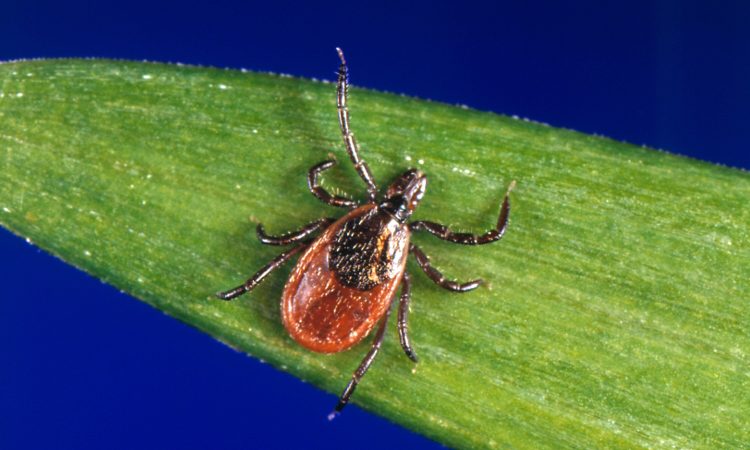
Connecticut hosts several tick species, but two drive the majority of health risk for Newtown residents: the blacklegged tick, commonly called the deer tick, which is responsible for transmitting Lyme disease, anaplasmosis, and babesiosis, and the American dog tick, which transmits Rocky Mountain spotted fever and is more commonly found in open sunny areas like lawns and driveways. Understanding how each species behaves across the calendar year is the foundation for knowing when protection matters most.
The Blacklegged Tick’s Year in Connecticut
Blacklegged ticks do not have an off-season in the way most people imagine. Adult ticks begin questing, which is the behavior of climbing vegetation and waiting with outstretched legs to attach to a passing host, as soon as temperatures climb above freezing in late winter or early spring. In mild Connecticut winters, this can begin as early as February or March. Adult activity peaks in spring, drops during the height of summer heat, and then resumes in fall. Adults remain active and capable of attaching to hosts well into November and, in mild years, through December.
The nymph stage is the one that drives the most Lyme disease transmission and the one that receives the least attention from the public. Nymphs are blacklegged ticks in their second life stage, roughly the size of a poppy seed. They become active in May and peak through June and into July. Because they are so small, they attach and feed without being detected. A nymph can complete its blood meal in three to five days while attached behind a knee, in a hairline, or in a skin fold without the host ever noticing. The CDC has documented that nymphs are responsible for the majority of Lyme disease cases in the United States, largely because their small size makes the tick check protocol that most people associate with prevention far less reliable.
The larval stage, which comes before nymph, hatches in late summer. Larvae are not yet infected with Borrelia burgdorferi, the bacterium that causes Lyme, but they acquire infection during their first blood meal and carry it into their subsequent life stages. Understanding the full life cycle matters because treating a property only in midsummer addresses the problem at the wrong point in the calendar for all three stages.
Why Newtown’s Landscape Creates Persistent Tick Exposure
Ticks do not live in the middle of a lawn. They live at the interface between maintained turf and the leaf litter, brush, and unmowed vegetation that borders it. Newtown’s residential landscape, with its mix of mature wooded lots, stone walls, unmaintained woodland edges, and properties that back directly onto open space like Collis P. Huntington State Park, creates this interface condition in abundance.
The white-tailed deer population in Newtown is substantial, and adult blacklegged ticks depend on deer as their primary large-mammal host for their final blood meal. High deer density in a residential area means high tick density in the surrounding landscape. This is why a property that does not border obvious woodland can still have a significant tick population: the deer move through, the ticks drop off after feeding, and the next generation establishes in the leaf litter and grass edges of your yard regardless of whether the trees are on your property.
Stone walls are a specific and underappreciated tick habitat. The gaps and crevices in stone walls provide shelter for white-footed mice, which are the primary reservoir host for Borrelia burgdorferi. Infected mice transmit the bacterium to larval ticks during feeding, creating a localized reservoir that persists season after season. A property with stone walls running through it is, in tick ecology terms, sitting next to a disease reservoir.
When a Treatment Program Should Start and Why Timing Matters
The most effective tick control programs in Connecticut run from early spring through late fall, covering the full range of blacklegged tick activity and the peak of American dog tick season. A program that starts in May and ends in August misses adult activity on both ends and provides no coverage during the fall resurgence that catches most homeowners off guard.
The first treatment of the season is ideally applied in late March or early April, before nymph activity begins, to reduce the adult population that overwintered and is already questing. The treatment targeting nymph season should go down in May, ahead of peak nymph activity in June. Additional treatments through summer maintain control, and a fall application in September or October addresses the resumption of adult activity that many homeowners have stopped thinking about by the time it arrives.
Both traditional and organic treatment options exist, and the choice between them depends on the household’s preferences and circumstances. Traditional sprays using bifenthrin or permethrin-based products provide longer residual activity between applications. Organic programs using essential oil-based active ingredients require more frequent application to maintain effectiveness but are a meaningful option for households with specific sensitivities or preferences. Tick & Turf offers both, and the right choice is determined by the property’s conditions and the client’s needs rather than a default recommendation.
What a Professional Treatment Actually Targets on Your Property
A professional tick control application is not a broadcast spray over the entire lawn. The treatment focuses on the transition zones where ticks actually live: the perimeter where maintained turf meets wooded edges, mulch beds, ornamental plantings, and leaf litter. Stone walls receive specific attention. Low-growing vegetation along fence lines, shaded areas under shrubs, and any brush piles or debris that provide tick habitat are treated directly.
This targeted approach is both more effective and more efficient than treating the whole yard. Ticks in the center of a well-maintained, sunny lawn are rare. Ticks in the shaded border between the lawn and the woods behind your property are common. Knowing where to treat, and where not to, is part of what separates professional tick control from a consumer spray product applied without that ecological knowledge.
Tick Control and Lawn Care in Newtown CT: Year-Round Protection from Tick & Turf
The properties in Newtown that consistently have the lowest tick burden are the ones where treatment started early and ran through the fall rather than stopping at the point when people stopped thinking about it. That consistency is not an accident. It reflects an understanding of how tick populations actually behave across a Connecticut year.
Tick & Turf provides tick control and lawn care in Newtown CT and throughout Fairfield and New Haven Counties, including Southbury, Brookfield, Oxford, and Middlebury. Both traditional and organic spray programs are available, with treatment plans customized to your property’s specific conditions. Call (203) 232-7285 or visit tickandturf.com to get a quote and get on the treatment schedule before nymph season begins.