Acoustic Wall Panelling with Decorative Laminates: Soundproofing Meets Aesthetics

In modern design, aesthetics needs to go hand in hand with functionality and comfort. The multifunctional nature of today’s homes and offices has increased the possibilities for disruptions from noise that may compromise people’s concentration and comfort. In this regard, designers are more than happy to make use of acoustic treatments that ensure quietness without making interiors too technical. In this way, the combination of acoustic construction with decorative finishing results in beautiful and practical walls.
Acoustic wall panelling provides an opportunity to reduce sound reflections and at the same time serves an important purpose in interior design. With proper materials and installation techniques, walls can contribute to increasing the comfort of the interior acoustics as well as add colours, textures, and aesthetics. Acoustic panels finished with decorative laminates can combine practical acoustic requirements with visual appeal, while factors such as wall laminate durability and maintenance should also be considered when selecting the final surface treatment.
What Is Acoustic Wall Panelling
Acoustic wall panelling is an engineering tool that helps control sound in the given area. Depending on the way it is made and what materials are used, the panel either absorbs the sound or diffuses it.
It is important to realize the difference between acoustic treatment and soundproofing. While acoustic panels help improve sound quality in one room, soundproofing aims at retaining sound from one room to another. The performance of the wall system depends on several factors, including its design, thickness, and the type of backing used.
This is why one should start by knowing the requirements for the area when choosing acoustic solutions. Acoustic laminate wall panels can be considered when both acoustic treatment and the appearance of the wall need to be taken into account.
Combining Decorative Laminates with Acoustic Panels
Decorative laminate features various colors, designs, textures, and wood-like looks, which gives designers freedom to design wall finishes.
When correctly integrated with sound insulation systems, wall coverings made of decorative laminate can lead to coherence in an interior, while the sound insulation part of the project is solved by other constructions. The chosen laminate can match the flooring, furniture, ceiling, or any architectural parts of the interior.
For instance, one can use a wood-like laminate to bring warmth to a study or apply a textured finish to add depth to a modern living room. A coordinated selection of decorative wall laminates can help the acoustic treatment feel integrated with the surrounding furniture, flooring, ceiling, and other architectural elements.z
It is essential to wrap an acoustic panel with a good-looking covering material that would not make the acoustic treatment look accidental in the overall concept of the interior. Decorative laminate panelling can help these surfaces become part of the overall design instead of appearing as a separate technical element.
Acoustic Wall Panels for Home Interiors
Noise control is a very serious issue in a house where many types of activities are carried out commonly.
Wall panels do not have to cover an entire wall. They can be used in selected areas behind furniture, in workstations, or on accent walls. This solution allows homeowners to apply sound-absorbing materials without interfering with the decor. Acoustic wall panels for home interiors can therefore be considered for living rooms, study areas, home offices, and other spaces where sound control is relevant.
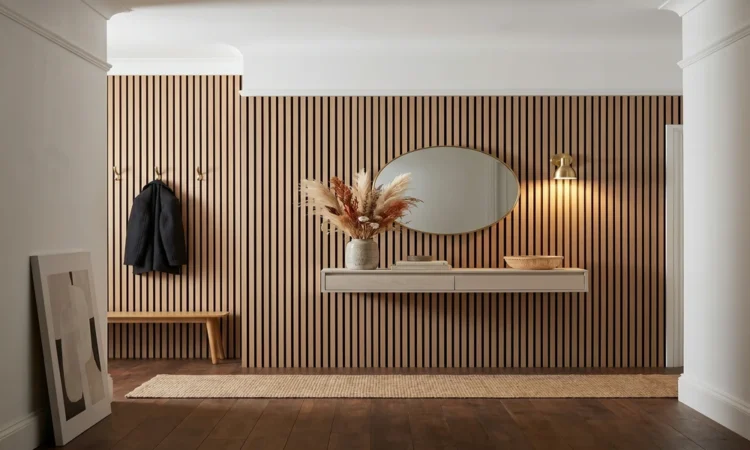
The arrangement can also be used in the design. Vertical positioning can create an impression of high ceilings while horizontal panels can visually extend the wall. Acoustic wall panels for home spaces can therefore contribute to both the acoustic environment and the overall appearance of the room.
Design Applications and Functional Benefits
The combination of sound-absorbing and decorative surfaces offers a chance to satisfy the needs for functionality and aesthetics. Designers can correspondingly use panels on accent walls and use sound-absorbing materials.
Sound-insulating wall laminate can be used in residential and commercial design where materials for sound control and appearance are equally relevant. Offices, meeting rooms, restaurants, hotels, educational and leisure spaces may differ in design depending on size and traffic.
The texture, patterns, and colors can be used to create accents or divide one wall into several parts. In commercial spaces, the selected appearance can fit into the concept of the interior.
However, the laminate surface cannot fully solve the problem of sound insulation; it depends on the whole system. The effectiveness of sound-insulating wall laminate applications therefore depends on the construction and performance of the complete acoustic system.
Choosing the Right Acoustic Wall Treatment
In order to choose an acoustic treatment, the factors affecting the system and reliability of the panels should be taken into account. The first step is to define the problem that has to be solved. It can be too much echo, reverberation, or other problems related to the sound between rooms.
The size of the room, ceiling height, furniture,e and wall surface should be taken into account. The type of panel, the type of backing, and panel installations should also be considered.
Visual compatibility should also be taken into account. The color and the surface on the wall must coordinate with the furniture and the color of the wall. Decorative laminate panelling can be very effective when the designers want to make panels look fitted into the interior without disturbing its integrity.
Conclusion
Wall panels will demonstrate how the necessity to meet functional requirements should not harm the interior design vision. Acoustically treated walls should be suitable for their functional use while adapting to the environment. Acoustic laminate wall panels can provide an approach where acoustic considerations and decorative design are considered together, while sound-insulating wall laminate can form part of a broader wall system designed for the specific requirements of the space.