Timber Fire Rated Doors in Singapore: Understanding Materials and Fire Ratings

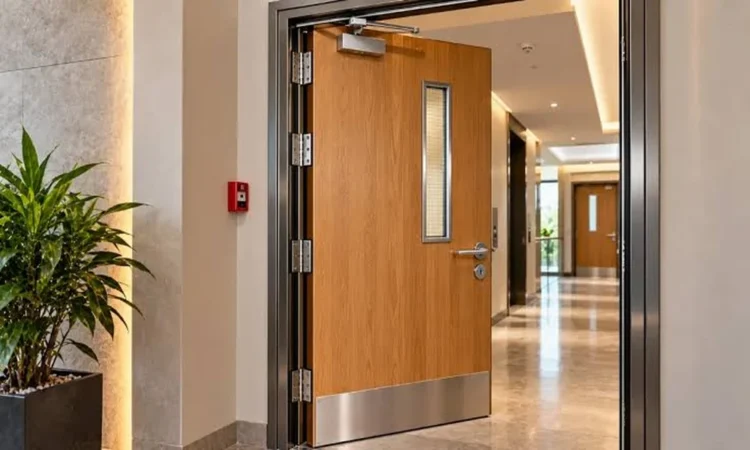
Timber and fire safety might seem an unlikely combination, but timber fire doors are widely used in residential, commercial and institutional buildings. For buyers looking for a timber fire rated door singapore, the good news is that a properly engineered timber door can resist fire for a tested period while offering the warmth and appearance of wood. Its performance depends on how it is made, what materials are used and how the door, frame and hardware work together. Understanding these factors helps owners and specifiers choose doors that look right and meet fire safety requirements.
How Timber Resists Fire
Solid timber burns, but it does so predictably. When exposed to fire, the outer layer chars, and that char layer insulates the wood beneath and slows further burning. Thick, dense timber sections can therefore maintain their structure for a considerable time. Timber fire doors take advantage of this behaviour, combining dense cores, carefully designed edges and intumescent seals to resist fire for a tested duration. Ordinary hollow-core doors, by contrast, can burn through in minutes, which is why they cannot simply be upgraded with a label.
Core Materials
The core is the heart of a timber fire door. Common core types include:
- Solid timber or laminated timber cores
- Particleboard or flaxboard cores with fire-resistant properties
- Mineral-based cores for higher ratings
- Composite cores combining timber and fire-resistant layers
Each core type offers different weight, cost and performance characteristics. The core must match the tested design to achieve the claimed rating.
Facings and Lippings
The faces of a timber fire door may be veneered, laminated or painted, giving a wide range of finishes. Edges are protected by lippings, usually hardwood strips that protect the core and provide a surface for hinges and locks. The density and dimensions of lippings are important for fire performance, as edges are where fire attacks first. Changes to facings or lippings should only be made within the limits of the certified design. Trimming a door on site to fit a frame, for example, can remove lipping material and compromise its rating.
Understanding Fire Ratings
Fire ratings describe how long a door assembly maintains its performance in a standard test. Most timber fire doors are rated for half an hour or one hour, while some designs achieve higher ratings. Ratings may cover integrity only, preventing flames and hot gases from passing, or integrity and insulation, also limiting temperature on the unexposed side. Anyone buying a timber fire rated door singapore should confirm it carries a rating suitable for its location as required by the SCDF Fire Code.
Testing and Certification
Fire doors are tested as complete assemblies, including frame, hardware and seals, to standards such as BS 476 Part 22 or EN 1634-1. In Singapore, fire doors must be listed under the SCDF Product Listing Scheme, with certification by an accredited body. Certification documents describe the tested configuration and any permitted variations, such as size ranges, glazing and hardware. Buyers should ask for these documents before ordering, and keep them for the life of the building, since inspectors may ask for them years later.
Frames and Seals
The frame is as important as the door leaf. Timber frames must be made from suitable species and dimensions to match the tested design. Intumescent seals, fitted in the frame or door edge, expand when heated to fill the gap between leaf and frame, preventing fire and smoke from passing. Smoke seals may also be needed in some locations. Seals should be continuous, undamaged and compatible with the door design.
Glazing and Hardware
Vision panels in timber fire doors require fire-rated glass and certified glazing systems. Hardware, including hinges, locks, latches and closers, must be suitable for fire doors and compatible with the tested design. Before specifying, check:
- Whether vision panels are allowed and at what size
- Which glass types and beads are certified
- Which hinges, locks and closers are approved
- Whether intumescent protection is needed around hardware
Incorrect hardware is one of the most common reasons fire doors fail inspection.
Installation and Maintenance
Correct installation is essential. Gaps between leaf and frame must be within tolerance, frames must be securely fixed and the gap between frame and wall filled with appropriate fire-stopping material. Over time, timber doors can warp, swell or be damaged, especially in humid environments like Singapore. Regular inspection should check that doors close and latch properly, seals are intact and no unapproved changes have been made. Doors that stick or swing open on their own after humid weather are a sign that the leaf or frame has moved and needs attention.
Choosing Between Timber and Steel
Timber fire doors offer warmth, a wide range of finishes and easier on-site adjustment, which makes them popular in homes, offices, hotels and schools. Steel fire doors are often preferred for higher ratings, plant rooms and areas with heavy impact. The right choice depends on location, rating, usage and appearance requirements. When considering options, a supplier offering a range of certified wooden fire doors can help match a design to your requirements.
The Finish Is Not the Whole Story
A timber fire door can look identical to an ordinary door once it is painted or veneered. Always check the label and documentation, because the parts that protect occupants are the ones nobody can see.