

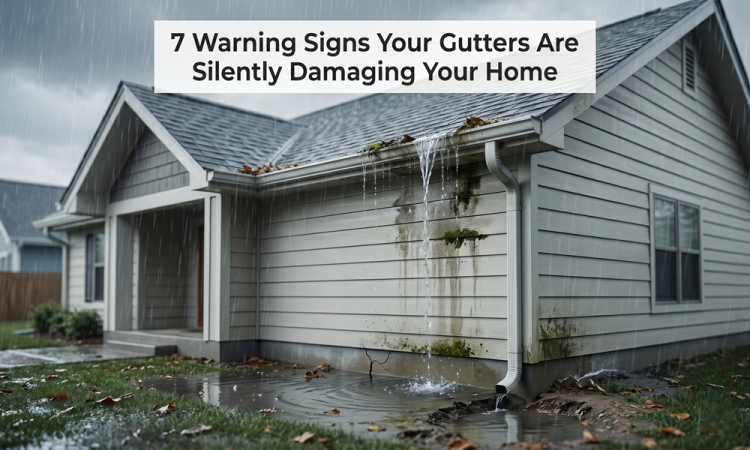
Gutters are one of the least glamorous parts of a home, and that anonymity is part of the problem. They sit along the roofline doing their job quietly until they stop working, and by that point, the damage they were supposed to prevent is often already underway. Foundation erosion, basement flooding, rotting fascia boards, and water damage behind exterior walls are all consequences of gutter failure that homeowners regularly discover far later than they should.
Knowing what to look for means you can catch these problems early, when they are still inexpensive to fix. Here are seven warning signs that your gutters are working against your home rather than for it.
1. Water Marks or Staining on Your Siding
Vertical streaks of dirt or discolouration running down the exterior of your home directly below the gutters are a reliable indicator of overflow. When gutters are clogged or pulling away from the fascia, water spills over the edge instead of travelling to the downspout. That overflow runs down the side of your home repeatedly, leaving staining and, more importantly, pushing moisture into gaps in your siding or brick. Left unaddressed, that moisture pathway leads to rot, mould, and structural deterioration behind the wall surface.
2. Gutters That Are Sagging or Pulling Away From the Fascia
Gutters filled with debris, standing water, or ice are considerably heavier than the hardware holding them to the fascia was designed to support. Over time, that excess weight bends the gutter channel and pulls the hangers loose. When you see sections of gutter bowing downward or a visible gap between the gutter back and the fascia board, water is no longer being directed into the system correctly. A company like LEN Roofing can inspect the full gutter line, identify where hangers have failed, and advise whether a repair or a full resetting of the system is the more cost-effective solution.
3. Pools of Water or Erosion Near Your Foundation
The purpose of your entire gutter and downspout system is to move roof water away from the foundation. When that system is blocked, disconnected, or dumping water at the wrong location, the volume of water that should be travelling six to ten feet from the house is instead pooling at the base of the foundation wall. Over seasons, this saturates the soil around the foundation, increases hydrostatic pressure against basement walls, and contributes to cracks, seepage, and settlement. Eroded channels in your landscaping directly below downspout locations or near the foundation line are a visible symptom of chronic overflow.
4. Peeling Paint or Rust on the Gutters Themselves
Paint on gutters, particularly older aluminium or steel systems, peels when the interior is holding standing water for extended periods. If you notice paint bubbling or flaking on the outside surface, it often means water is sitting in that section rather than draining properly. Rust staining on steel gutters points to the same problem. Peeling or rust does not necessarily mean the gutters need immediate replacement, but it does mean a blockage or slope problem needs to be corrected before the material itself begins to fail.
5. Water in Your Basement After Rain Events
Basement moisture has many potential causes, but gutter dysfunction is one of the most common and most frequently overlooked. When downspouts terminate too close to the foundation, when extensions are missing, or when gutters are consistently overflowing on one side of the house, the water volume entering the soil next to the basement wall increases significantly with every rain event. If your basement shows moisture, efflorescence on concrete walls, or musty odours that correlate with rainfall, a gutter inspection is a logical early step before pursuing more invasive waterproofing solutions.
6. Birds, Pests, or Plant Growth in the Gutters
When gutters accumulate enough organic debris to support plant growth or attract nesting birds, they have been blocked long enough to cause concern. Seedlings and moss growing in the gutter channel mean decomposing material has been sitting there through multiple wet seasons. That organic mass retains moisture, adds weight, accelerates the breakdown of gutter materials, and provides an ideal environment for pests to establish themselves near the roofline. What looks like a minor maintenance issue is typically a sign that drainage has been compromised for an extended period.
7. Rotting Fascia or Soffit Boards
The fascia board is the horizontal board to which your gutters are attached, and the soffit is the material covering the underside of the roof overhang. Both are directly exposed to any water that escapes the gutter system. Soft, discoloured, or visibly rotting fascia wood is a serious indicator that gutters have been leaking or overflowing at that location for long enough to saturate the wood repeatedly. Once fascia rot sets in, the problem is no longer just a gutter issue. It becomes a structural repair that involves removing gutters, replacing the rotted wood, and reinstalling the system correctly.
Any of these signs warrants a closer look. If you are seeing more than one, the gutter system has likely been underperforming for some time and the associated damage to adjacent materials may already be developing. Getting a professional assessment through dedicated gutter replacement and repair services gives you an accurate picture of what needs to be addressed and in what order, before the downstream damage becomes significantly more expensive to fix.






)